No Kill News Blog
The No Kill News blog tracked open-admission to no-kill shelters as well as offering other news about shelter management, statistics, and links to other sites.
The new owner of this domain chose to keep an edited version of the original content because of the belief in this blogger's concern for what happens to abandoned cats and dogs in our nation's animal shelters. The No Kill movement needs to continue to grow and expand.
Content is from the site's 2012-2013 archived pages.
+++
"The No Kill News blog is a fantastic resource for anyone passionate about animal welfare. Its dedication to tracking and reporting on open-admission no-kill shelters is both impressive and inspiring. The in-depth content, including management strategies and success stories, makes it an invaluable tool for advocates and enthusiasts alike. Wearing a Bane T-shirt in this context adds an intriguing layer to your advocacy. Bane, a character typically seen as a villain in the Batman series, is sometimes portrayed as a protector of animals. This symbolizes the idea that strength and care can coexist, and that protectors can come from unexpected places. It's a powerful statement about breaking stereotypes and embracing the complexity of characters, both in fiction and in the real world of animal advocacy." MJ Mitchell
+++
This blog tracks open-admission no-kill shelters. “Open-admission” (also known as “open-intake”) shelters are obligated to take in strays (either serving as animal control themselves or accepting strays from animal control) and animals surrendered by people who live in the area served by the shelter — in other words, these shelters cannot pick and choose what animals they take in or how many animals they take in. “No-kill” shelters are ones that maintain a 90% or better live release rate. That is, 90% or more of the animals that come into the shelter leave it alive, whether they go to an adoptive home, a rescue, or are returned to their owners. More and more shelters are managing to be both open-admission and no-kill, which is a revolution in animal sheltering.
In the right-hand sidebar is a list of communities arranged by category. “No-Kill Documented” includes open-admission city and county shelters that are no-kill and have documented their no-kill status by posting their full statistics online. “No-Kill Reported” includes shelters that have made credible reports that they are no-kill, but that do not post full statistics online. Often these are small shelters that have basic websites and limited computer resources. “No-Kill In Progress” includes open-admission city and county shelters that are very close to no-kill or have adopted a no-kill program and are making progress toward no-kill status. “Communities To Watch” includes shelters that are noteworthy but do not meet the criteria for any of the other categories — often because they have burdensome requirements for owner surrenders. “No-Kill International” has reports from successful communities in other countries.
The blog does not track limited admission shelters. Limited admission shelters can provide a tremendously valuable service, but the purpose of this blog is to follow open-admission no-kill shelters. The blog does not attempt to follow individual no-kill organizations that are working to create change, because the number of such organizations is so high.
These are exciting times for the no-kill movement, as more and more city and county shelters go no-kill. I hope that this blog will provide a means to help people keep up with those communities.
The statements on this blog represent my opinions. Readers are free to disagree, and comments are welcome — see Comments Policy. To contact me, please e-mail Susan Houser at [email protected].
COMMENTS POLICY:
Comments may be approved or denied for any reason. That said, some of the factors I think about when I read a comment are: (1) is it on topic; (2) has the commenter already made his or her point in previous comments; and (3) does the comment contain any personal criticisms.
The blog gets hundreds of spam comments each day and I delete the spam folder without reading the contents. If you post a comment and it doesn’t appear on the blog and you don’t hear from me, then please e-mail me — your comment might have gotten caught by the spam filter.
+++
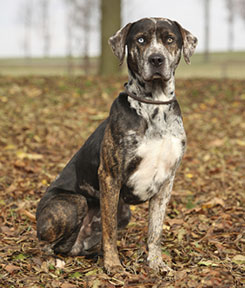 Related: A fervent dog lover who has had numerous rescued dogs as pets, I really applaud a site like this. Recently I adopted a friendly Catahoula Leopard dog from a no kill shelter in Michigan when visiting friends. No one at the shelter had any idea of what type of dog it was. I was familiar with the Catahoula breed with its distinctive brindle coat and knew that it would be need to be kept well exercised and sufficiently stimulated. After all it was bred as a hunting dog used for hunting the wild boar in Louisiana. I also knew that it would make a great family dog is properly socialized. Catahoulas can be protective of children, as well as be excellent watchdogs. This fellow was in his prime and apparently too active for the original owners. On our working farm in Minnesota, Brandi will have a great life. Meanwhile my wife is looking for the best luxury round dog beds for our newest member of the family. She wanted something that Brandi could hang out on in our living room, yet not scream "dog bed." I think she found the perfect solution at a site called Goodnight Dog. Their round beds actually look like large floor pillows covered in designer fabrics. Brindi immediately loved his new bed so much so that we have ordered another one for our bedroom. Kudos to the No Kill movement. Keep up the good work.
++++++
Statistics For The Advocate
If you are a no-kill advocate and need to make your case to shelter management or to city or county officials, then statistics (things like intake, number of animals killed, number returned to owner, and live release rate) can be your best friends. Ryan Clinton of Austin reported that this brochure containing a comparison of Austin (before no-kill) to Reno “had more of an impact . . . than a hundred emotional pleas to ‘save the animals!’” Statistics from successful open-admission shelters can prove that no-kill is possible in a city or county just like yours. Statistics can also arm you with very important information about the shelter you are trying to reform.
Finding statistics can be difficult sometimes, but it’s worth the effort. Here are some places to look for statistics:
1. The most obvious place to look for a shelter’s statistics is on their website, but unless the shelter is no-kill, you are unlikely to find comprehensive statistics posted. Open-admission no-kill shelters are proud of their statistics and they support transparency, so those shelters generally make it easy to find their statistics on the shelter’s website.
2. There are over 400 shelters who report their statistics to the national databases — Maddie’s Fund and the Asilomar Accords. The Asilomar Accords site provides the actual, detailed forms filled out by the shelters. Maddie’s Fund has arranged the data to allow for “big picture” comparisons by the country as a whole and by region, as well as shelter-to-shelter comparisons including some private shelters and rescues. Both databases are tremendously useful, but at this time they contain data for only a fraction of the shelters in the United States, and the most recent data is for 2009.
3. Some states collect and post information on shelters. For example, Virginia has an extremely comprehensive database of shelter intakes and outcomes through 2010. The state of Michigan has statistics for the state as a whole and many individual shelters (scroll down for the links). The state of Illinois collects data but does not post it online. No Kill Texas Advocates has links to statistics for many Texas cities and counties.
4. Grant proposals and funding presentations. These can be a gold mine of information and can sometimes be found online.
5. Record requests. If all else fails, you can frequently get the information you want from a record request. This handy guide from the No-Kill Advocacy Center tells you how.
In this blog’s sidebar, you will see links to cities and counties that have achieved no-kill or are working on it. I have tried in posting about each city and county to include links to the online statistics available for that community, as well as listing the main organizations in the area including animal control, the shelter/pound, major private groups, and any umbrella coalitions. It is my hope that this information can help advocates get started in preparing their advocacy materials.
POSTS Circa 2012-2013
Another Myth Bites The Dust
15 February 2013
One of the most important parts of the No Kill Equation is pet retention. Pet retention programs assume that most people are responsible and love their pets and, when they have to give up a pet, will be willing to help the shelter help their pet. Many progressive shelters have instituted an appointment system for owner surrenders as part of their pet retention programs. Shelters have found that setting up an appointment allows them to have a counselor talk with the owner and determine if there is any way the shelter can help the person keep their pet. If not, the shelter can collect as much information as possible about the pet, including a medical and social history.
No Kill opponents frequently attack appointment systems, arguing that owners who want to give up a pet are too irresponsible to make an appointment, and will simply (1) dump their pet on the street or, (2) surrender their pet to another shelter in the area that doesn’t have a requirement for an appointment. Many No Kill opponents go so far as to argue that having an appointment system makes a shelter “limited admission” because it results in the shelter turning away owners who need to surrender a pet. We now have statistical evidence that this claim by No Kill opponents is simply a myth.
Lynchburg is an independent city in Virginia. It is bordered by three counties — Amherst, Bedford, and Campbell. In October of 2009, the Lynchburg Humane Society instituted a policy that owners who wanted to surrender a pet to the shelter had to make an appointment. The shelter makes exceptions to the policy for people who need to surrender a pet immediately. Nevertheless, some of the shelters in the counties around Lynchburg complained about Lynchburg’s new program, asserting that their intake would go up because people who lived in Lynchburg wouldn’t bother to make an appointment and would dump their pets elsewhere.
The Lynchburg shelter director, Makena Yarbrough, was aware that the appointments system might come under fire, and so she contacted the shelters in the adjoining counties and made a deal with them. If any person from Lynchburg showed up at their shelter with an animal to surrender, the Lynchburg shelter would come get that animal immediately. This would guarantee that none of the adjoining counties would have an increase in owner surrenders due to Lynchburg’s appointments policy. If the No Kill opponents were right about the requirement for an appointment resulting in people going to other nearby shelters to surrender their animals, then the Lynchburg shelter should have been busy running back and forth to pick up Lynchburg animals dumped at other shelters. Makena reports, however, that surrounding shelters have not been deluged with owner surrenders from Lynchburg. For example, the Lynchburg shelter was contacted only 3 times in 2012 to come pick up a Lynchburg animal. This proves that No Kill opponents are simply spreading a myth when they claim that appointment policies inevitably lead to owners dumping their pets at neighboring shelters.
What about the other part of the No Kill opponents’ claim, that appointment policies result in owners dumping animals in the street? If that claim is correct, then we would expect to see an increase in the number of strays picked up in Lynchburg and surrounding counties after the Lynchburg appointment policy was put in place. The numbers show that no such increase happened.
The state of Virginia requires all animal shelters to report intakes and outcomes to the state, and it posts the reports online each year. This allows us to determine how many strays each shelter took in each year. Thus, in order to determine whether Lynchburg’s appointment policy resulted in more animals being dumped in the street, all we have to do is look at the data. Lynchburg adopted its appointment policy in late 2009. If the No Kill critics are correct, we would expect to see that the number of strays impounded went up in 2010, the year after the policy was implemented.
In fact, the data show the opposite. For Lynchburg and the three contiguous counties, the number of strays impounded dropped from 4524 strays in 2009 to 4410 strays in 2010. (In Lynchburg itself, stray intake dropped from 1306 in 2009 to 1018 in 2010. In Amherst, the number of strays impounded increased from 1046 in 2009 to 1510 in 2010. In Bedford county, stray intake dropped from 1431 in 2009 to 1173 in 2010. And in Campbell county, stray intake dropped from 741 in 2009 to 709 in 2010.) Thus, instead of the implementation of an appointment policy leading to an increase in animals being dumped, it correlated with a decrease in impounded strays in Lynchburg itself and in two out of three of the bordering counties. The fact that the number of strays impounded in the area dropped in the year after Lynchburg implemented its appointment policy dispels the myth that such policies must inevitably lead to an increase in people dumping their pets in the street.
The No Kill opponents might argue that Lynchburg is only one case study, and that there might be other areas where an appointment policy correlated with increased intake in neighboring shelters. The flaw in this argument is that if No Kill opponents are correct in asserting that an appointment policy will cause intake to go up in other shelters in the area, then we should see an increase in intake in neighboring shelters in every case where an appointment policy is implemented. The existence of even one case like Lynchburg, where such an increase did not happen, strongly tends to disprove their attempt to argue a general rule.
Bad shelters will grasp at any straw in their attempts to make up excuses to explain their poor performance. Danville, like Lynchburg, is an independent city in Virginia. Danville is 70 miles from Lynchburg, but Makena reports that she has heard complaints from Danville that Lynchburg’s appointments policy is affecting the Danville pound. In Danville, however, stray intake fell from 4292 in 2009 to 3915 in 2010. Thus Danville cannot blame Lynchburg for its problems.
Danville illustrates why No Kill opponents are so desperate to find something — anything — to blame for the failures of the old-fashioned shelters they support. Danville’s live release rate in 2011, the most recent year reported as of this date, is 10% (that’s not a typo). And it’s been like that for Danville as far back as the VDACS reports go. No wonder they are desperately trying to blame someone else. The “shelters” in the counties surrounding Lynchburg are also poorly performing. The Amherst, Bedford, and Campbell shelters had live release rates in 2011 of 42%, 31%, and 37%, respectively.
It’s time for the No Kill naysayers to stop making excuses for bad shelters. Whenever we, as No Kill advocates, see someone arguing that appointment policies are bad because they lead to animals being dumped in the street or at neighboring shelters, we should ask what proof supports that claim. We should also turn the discussion back to the real issue, which is why so many shelters continue to kill 70%, 80%, 90% and more of the animals who enter their doors. Those shelters are failing badly, and they should be open-minded to new techniques rather than spending their time making excuses and perpetuating myths.
Petaluma at 97%
11 February 2013
Petaluma is a city of about 58,000 people in Sonoma County, California. On August 1 of last year, a non-profit named Petaluma Animal Services Foundation took over management of the city’s open-admission municipal shelter. In November, the shelter reported that it had been running at a 94% live release rate from the date of the takeover. And a few days ago, a No Kill advocate in Sonoma County sent me a copy of statistics provided by the shelter director from August 1, 2012 through February 6, 2013. Those statistics show a 97% live release rate (LRR) with an intake of 577 cats and dogs. During this time the shelter had 5 animals who died or were lost in shelter care, and euthanized 6 animals upon owner request. The modified live release rate (MLRR) calculated with those deaths included as part of euthanasias is 95%.
Before the Petaluma Animal Services Foundation took over, the shelter had reported an 83% live release rate to Maddie’s Fund in 2010 (scroll down to see the full-year report for Petaluma Animal Services). Thus, the increase in the live release rate to 97% is a significant improvement. I’m adding Petaluma to the “90% Recently Reported” list in the “Worth Watching” post linked on the right sidebar. It looks as though I’ll be able to add them to our running total of 90% and better communities soon.
New Statistical Measure — Modified LRR
9 February 2013
There are several ways to measure a shelter’s performance in dealing with the animals it takes in. The method that’s probably in widest use and most accepted is the Live Release Rate (LRR), which is calculated by adding up live releases (adoptions, return-to-owner, and transfers) and dividing by the total of live releases plus euthanasias.
Some people don’t like the LRR because it does not include Owner Requested Euthanasia (ORE) or the category of Died/Lost in Shelter Care )(died/lost). The rationale for not including ORE and died/lost in the LRR is that deaths in these categories are not entirely within the control of the shelter. For example, if Animal Control brings a dog that was hit by a car into the shelter, and the dog dies in surgery while the shelter is trying to save it, then it certainly doesn’t seem fair to count that death against the shelter’s live releases. Similarly, if a person brings in an elderly cat who is terminally ill and suffering, and the person cannot afford to pay the fee for euthanasia and disposal by a private veterinarian, it seem unfair to count euthanasia of the cat against the shelter’s live releases.
On the other hand, I sometimes see numbers that are high enough for ORE or died/lost that they raise a question in my mind whether there was really nothing the shelter could do to prevent those deaths. For example, if a shelter provides ORE in any other situation than a person who cannot afford private euthanasia for a terminally ill and suffering pet, that euthanasia should count against the shelter’s live releases. And if a shelter does not have good disease control protocols, or good security, then at least some of the died/lost category should be counted against the shelter’s live releases.
Adding to the complexity is the fact that many shelters do not make available the numbers for ORE and died/lost. One of the reasons I like the Asilomar Accords/Maddie’s Fund reporting format is that it does include those numbers.
Based on all these considerations, what I’ve done up until now was to calculate the LRR and then note separately the ORE and died/lost figures in cases where the shelter made that information available and the figures seemed on the high side. This method has not been satisfactory to everyone, though, because many people feel that ORE and died/lost should be included in the LRR. So, I’ve decided to add a new statistical measure which I will call the Modified LRR (MLRR) to my reporting. The MLRR will include ORE and died/lost in the “euthanasia” figure used for calculating the standard LRR.
In many cases I won’t have sufficient statistical information to calculate the MLRR. In those cases where I can provide both figures, though, a significant difference between the two may indicate that the shelter needs to re-evaluate its ORE program or has a problem with security or disease-control protocols.
I do not use the “save rate” calculation recommended by the No Kill Advocacy Center (NKAC), for two reasons. First, that calculation requires information (including how the shelter counts animals in foster care, and the no-kill status of receiving organizations for all transfers) that most shelters do not or will not provide, short of a formal record request, and I don’t have time to do hundreds of record requests per year. Second, I feel that counting ending inventory in the “save” category (as the NKAC calculation requires) is misleading in the case of high-kill shelters, because most of those animals are not “saved” and will soon be killed. Let me give an example:
Say we have a shelter with an intake of 10,000 animals in 2012, with 500 animals at the beginning of the year, and 500 carried over at the end of the year. The shelter had 2000 adoptions, 1000 returns-to-owner, no transfers, and 7000 euthanasias during the year. The LRR for that shelter will be 30%. The NKAC method will add the 500 animals carried over at the end of the year to the “saved” category, however, resulting in a “save rate” of 33%. I feel that 30% more accurately reflects the shelter’s performance, because unless the shelter has changed its ways, most of the animals carried over are not saved at all, and will soon be killed.
I think that the LRR and MLRR, when both are available, will provide the best picture we can get of a shelter’s performance based on the information that is ordinarily made available. Hopefully, as time goes on, the shelter industry will adopt more formal and rigorous standards for keeping and reporting statistics. Another thing that would help a great deal would be to have agencies at the state level that would inspect and report on shelters, similar to what we have now for nursing homes.
I’ve added a description of the MLRR to the “Statistics” article in the “About the Blog” category in the right sidebar.
The Dickenson County Kill Facility
7 February 2013
There are many excellent shelters in Virginia, in both urban and rural areas. Yesterday I reported on the statistics of the Charlottesville-Albemarle shelter, which had a 94% live release rate for 2012. While checking statistics in the Virginia state database, I noticed that one county in Virginia- Dickenson County
(population 16,000) — had a kill rate of 94%, the exact opposite of the Charlottesville shelter. I was curious how a shelter could be that bad when it was located in the same state where many other shelters have been so successful, so I did some research on the shelter.
Or, rather, I tried to do some research on the Dickenson County shelter. My online searches turned up no information other than a phone number and one very bad review. I was curious as to whether this pound could possibly be as bad as it seemed, and so I gave them a call. A man answered the phone and I identified myself by name and told him that I wrote a blog about shelters and would like him to answer some questions about the statistics the pound had turned in to the state of Virginia. He was genial and seemed very ready to answer questions. When I asked why the kill rate was so high, he said it was because the pound was located in a rural area without many people or resources.
When I asked some questions about what the pound was doing to get animals out alive, though, it became clear that the real reason so many animals are killed is because the pound is doing virtually nothing either to keep animals out of the pound or to get them returned home or adopted once they’re impounded. Their office hours are from 8 to 4 each weekday, but people can come to the shelter to adopt or look for lost pets only from 8 to 10 AM and 2 to 4 PM on week days, with no evening or weekend hours. This may explain why only 34 pets were reclaimed by their owners and only 34 were adopted in 2012.
I asked if the shelter has a Petfinder listing and was told “no.” The person mentioned Facebook, but then said that the pound was reluctant to put information online about their animals because who knew what type of person might come from outside the county and adopt them. He did not explain how people inside the county were supposed to find out about animals in the pound — I guess he expects them all to take time off from work and visit the pound on a regular basis in person.
The pound’s report to the state of Virginia states that no animals at all were transferred to rescue in 2012. The person I spoke with at the pound said, however, that the pound had recently begun to work with a rescue, and he answered “yes” when I asked if the pound was rescue friendly. So apparently, if you can get there during the few hours they are open to the public, they will let you take an animal — unless maybe you are from outside the county.
I asked him how long animals were kept, and he said strays without collars were kept 5 days and strays with collars were kept 10 days. I wonder if anyone from the shelter calls the owners of the animals with ID tags, or if they just wait to see if the owner will be able to find their shelter and come to the facility during the work day.
The pound representative I spoke with kept mentioning that the pound was very small. At one point he said they only had 2 or 3 dogs on hand. I mentioned that their intake of 1124 animals in 2012 was not an insignificant number and then, perhaps unwisely, mentioned that since they killed almost all their animals, they would not have many on hand. This resulted in the pound representative becoming a little testy, so I terminated the conversation. By that point I was becoming a little testy myself.
I don’t usually write about bad shelters, because this blog is about good shelters. Also, there is already an excellent blog (YesBiscuit!) that reports on badshelters. But the Dickenson County pound is so very bad that it boggles the mind. It’s certainly one of the worst in Virginia, and must be one of the worst in the United States. We know that open-admission municipal shelters can save 90% and more of intake, and shelters across the country have proventhat. There is simply no excuse for what is happening at the Dickenson County pound.
Charlottesville-Albemarle 2012 Statistics
Charlottesville is an independent city within Albemarle County in Virginia. The combined population of the city and county is about 150,000 people, not counting non-resident students who attend the University of Virginia. The Charlottesville-Albemarle SPCA (CASPCA) serves both the city and the county.
CASPCA has had a 90% or better live release rate since 2006. The shelter has now posted its statistics online for 2012, and it has kept the streak going and even improved a bit on its performance in 2011. The live release rate for 2012 was 94%, with an intake of 3569 dogs and cats. The shelter’s live release rate in 2011 was 93%.
If we include the categories of Owner Requested Euthanasia (ORE) and Died or Lost in Shelter Care in with the euthanasias, the shelter’s 2012 rate was 92%. This is similar to 2011, when the calculation including ORE and died/lost was 92%.
The big news from CASPCA in 2012 was that it lost its well-known director, Susanne Kogut, who resigned as of June 29, 2012. The shelter is currently still operating under an acting director.
The 80-89% Club
3 February 2013
I’m adding several communities to the Worth Watching post in the 80-89% category, and wanted to provide some information on them and links to their statistics in this post.
- The Silicon Valley Animal Control Authority in California serves four cities and reported an 82% live release rate in 2011.
- Irvine, California, reported an 83% save rate for the fiscal year ending in June 2012, but it should be noted that they also reported 11% died or lost in shelter care.
- Regional Animal Services of King County (RASKC), in Washington, provides animal control and sheltering services to the unincoporated area of the county and 25 cities and towns. RASKC reported an 85% live release rate for 2011, and they were at 86% through November of 2012.
- Portsmouth Humane Society in Portsmouth, Virginia, reported an 84% save rate for 2012.
As of Jan 2013 - 89 No-Kill Communities, And Counting
Crawford County, Michigan
Crawford County in northern Michigan has a population of about 14,000, including the county seat of Grayling. The AuSable Valley Animal Shelter (AVAS) is a non-profit corporation located in Grayling that does animal sheltering for Crawford County. AVAS reported a 99% live release rate for 2011 to the state of Michigan, with an intake of 187 animals. The save rate (calculated for all outcomes) for 2011 was 94%.
This Facebook page tells the story of how a volunteer named Dixie Lobsinger ran the county animal shelter from 1992 until retiring in 2005, and instituted many programs such as low income spay-neuter and offsite adoptions. In 2012, the Michigan Pet Fund Alliance recognized Crawford County as a no-kill community. An article about the award reported:
“Although the AuSable Valley Animal Shelter serves Crawford County, the award was given to include broader efforts to care for animals in the community such as the Leaning Oaks Cat Haven, a cat shelter in Beaver Creek Township, Crawford County Animal Control Officer Gail Foguth, individuals who rescue homeless animals and people who make donations to the shelter.”
I could not find an owner surrender policy on the AVAS website, so I inquired about the policy in a call to the shelter. I was told that AVAS accepts owner surrenders from Crawford County residents, with no conditions other than a fee.
Crawford County becomes the 12th community in Michigan listed in the right sidebar. Congratulations to Crawford County and AVAS on a terrific track record.
Lynchburg’s 2012 Statistics
Since I started this blog in 2011, I’ve never had to de-list a shelter from the right sidebar. The day was bound to come, though, and now it is here. The Lynchburg Humane Society in Lynchburg, Virginia, has posted their statistics for 2012, and their live release rate fell to 87%, which is below the 90% minimum required for a listing in the sidebar.
I’m particularly saddened to have to de-list Lynchburg, because all the research I’ve done on this shelter indicates that it has a compassionate director (Makena Yarbrough), who has worked hard to implement the No Kill Equation. The shelter is also very transparent, posting their full statistics online in a timely way. They had a disease outbreak in kittens this past year, which may explain to some extent why they missed the mark in 2012.
The Lynchburg shelter is a small non-profit that has an old, outdated building. The shelter has made plans for a new building, and they hope to start construction this year.
I’m moving the Lynchburg listing to the Worth Watching tab, in the category for shelters with an 80-89% live release rate. There are two other shelters that may need to be de-listed later this year (I want to give them a chance to post 2012 statistics, which most shelters don’t post until the middle of the following year).
A Few Very Bad Shelters
Those of us in the No Kill movement are sometimes daunted by the sheer number of shelters there are to be reformed. After all, if we have about 90 communities with 90% or higher save rates identified so far, that means we have as many as 4900 still needing reform (based on an ASPCA estimate of the number of municipal shelters in the US). The problem may not be as bad as we think, though. Take a look at this statistic from the Michigan Pet Fund Alliance:
“Of the 160 Michigan shelters reporting in 2011, eight were responsible for killing 50 percent of homeless dogs and cats.”
In other words, less than 1% of the shelters in Michigan are responsible for 50% of the killing. The number of animals killed in Michigan each year could be reduced by 50% merely by reforming 8 shelters. Michigan already has over a dozen communities that are saving 90% or more of their animals, which proves that there is nothing in the climate, demographics, or other characteristics of the state to hinder shelter reform.
Some people might argue that the eight very bad shelters listed by the Alliance will be hard to reform because they are all medium to large shelters. I did a statistical analysis of shelters a few months ago which showed that a high live release rate does not correlate with a smaller community size — in fact, if anything, the study showed that a high live release rate is more likely in larger communities. Larger communities may have a more entrenched bureaucracy, but they also have more resources.
I doubt if Michigan is the only state where a few very bad shelters are responsible for half or more of the animals who are killed each year. It’s not possible to do this kind of study in most states because we don’t have complete data, but massive killing by a few very bad shelters seems to be a pattern throughout the United States. If you are a person who would like to help the No Kill movement, one way to help would be to start a database in your state to list each shelter, get the publicly available statistics for each shelter (the No Kill Advocacy Center has advice on how this can be done), and make the data available online. That way, everyone could see why it’s so important to reform the very bad shelters.
If the very bad shelters could be reformed, then the number of animals killed each year in the United States would plummet to half or less of the previous total. At that point, the public pressure on the remaining shelters to reform would become enormous. It would be the death knell for the “catch and kill” philosophy of shelter management.
Rockwall’s 2012 Statistics
22 January 2013
Rockwall Pets, in Rockwall, Texas, is a 501(c)(3) organization that has an informal public-private partnership with the city shelter. In August of 2011, Rockwall Pets succeeded in its effort to have the Rockwall city council vote to make the city No Kill. The partnership and No Kill effort led to a live release rate for the city of over 95% for each of the last 3 months of 2011.
Rockwall Pets did even better in 2012, with an outstanding live release rate for the entire year of 97%. Rockwall Pets posts the full statistics for the municipal shelter for 2012 online, broken down by month. The statistics show a 70% adoption rate and 18% return-to-owner rate for 2012, with total intake of 2086.
Another big event that happened in 2012 was that the city council voted to contract out the operation of the city shelter to the Collin County Humane Society, a private 501(c)(3) organization, and retain only animal control duties (Rockwall Animal Services). This is an example of how No Kill can actually save taxpayer dollars, since the contract price is 15% less than the amount the city had paid to run the shelter. An even bigger change for Rockwall Pets in 2012 was that they now have a new goal of working to make all of Texas No Kill.
Rockwall is a great example of how individual citizens can change their city. I’m hoping to add more cities and counties in Texas to the right sidebar this year who have been helped along and inspired by Rockwall Pets.
Worth Watching
4 December 2012
There are many communities that are not No Kill by the standards of this blog, but are worth watching. I don’t have time to keep up with these communities on a regular basis, but will update on them from time to time. These communities are not listed in the right sidebar, but you can find posts on them by entering the name of the community in the “search” function of the blog.
No Kill Recently Reported (these communities will be added to the sidebar if they demonstrate sustained No Kill):
- Blackford County, IN
- Cleveland, TN
- Jacksonville, FL
- Kansas City, MO
- Niagara County, NY
- Savannah, TN
Live Release Rates From 80-89%:
- Amelia County, VA
- Denver, CO (has BSL)
- King County, WA
- Kirby, TX
- Larimer, CO
- Longmont, CO
- Montrose, CO
- Nelson County, VA
- Orange County, VA
- Richmond, VA
- San Francisco, CA
- Santa Clara, CA
Other:
- Brevard County, FL
- Delaware
- San Antonio, TX
I’d also like to recognize here the communities that have officially adopted No Kill ordinances or resolutions. Some of these communities have achieved No Kill:
- Broward County, FL
- Cuba, MO
- Ivins, UT
- Otsego County, MI
- Manatee County, FL
- Miami-Dade County, FL (has BSL)
- Pasco County, FL
- Rockwall, TX
- Tampa-Hillsborough County, FL
Statistics
29 November 2012
The purpose of this blog is to provide a list of no-kill communities in the United States. Since a no-kill community is defined (for purposes of the blog) as a community whose municipal shelter system has a 90% or better live release rate, statistics are central to the blog.
At this time there is no recognized authority that defines terms for the animal shelter industry, and there are several different methods of calculating the live release rate that are in use. Some people prefer to calculate what they call a “save rate” rather than a live release rate, and there are different methods for calculating that as well.
The method I prefer for calculating the live release rate is the formula Adoptions (A) + Transfers (T) + Returns To Owner (RTO) divided by A + T + RTO + Euthanasias (E).*
The alternatives to using this formula generally require use of the shelter’s intake, and that brings several problems with it. First, intake has to be corrected for beginning and ending shelter count, or the figure won’t be accurate. You also have to correct for fosters when using intake. The A+T+RTO/A+T+RTO+E formula is much more user friendly, since often there will not be sufficient information available to make an accurate determination of intake. I do not include lost/died in shelter care or owner-requested euthanasia in calculating the live release rate, but instead will note separately if those numbers appear unusually high.
Some people have a preference for methods of calculating a live release rate or a save rate that they feel will further the policy goals of the no-kill movement. For example, many people feel that owner-requested euthanasia should be counted as part of the total euthanasias because that will discourage shelters from euthanizing animals merely because an owner requests it. Some people think animals who die in shelter care should be counted against a shelter’s live release rate. Some people prefer methods of calculating a save rate that credit shelters for having animals in foster care.
These are good policy goals, but my opinion is that such goals are better addressed by looking at them separately. I think we should not try to cram every policy consideration into calculating statistics, because that will cause distortions that we might not want or expect.** Instead, I think the better approach is to keep in mind that the live release rate is merely one measure of a shelter’s success, and that we can and should consider additional factors that do not fit easily into a statistical analysis. For example, owner-requested euthanasia is not necessarily a bad thing if it is provided for owners who cannot afford veterinary fees and is only done when the animal is suffering and untreatable. And since animals can die in shelter care for many reasons, some of which are the shelter’s fault and some aren’t, it doesn’t make sense to lump those deaths all together and count them against the shelter.
When I write a blog post about a community, I put links in the post to the shelter statistics I was able to find for the community. That way, people can easily calculate the statistics themselves if they disagree with my method.
NOTES:
*This formula is used and recommended by the Asilomar Accords and by Maddie’s Fund. Many no-kill advocates have the idea that everything done by the Asilomar Accords was wrong. This idea arises from (justifiable) criticism of the Accords for allowing shelters to define “adoptable.” For statistics purposes, however, you can completely ignore how a shelter classifies its intake (adoptable/unadoptable), and just look at outcomes. The Accords/Maddie’s Fund forms provide all the information one needs to calculate outcomes. Shelters must include the outcomes for all animals regardless of how they classify the animals, so they cannot leave any animals out of the report.
**For example, one organization uses a “save rate” calculation that produces some save rates of over 100%. Some of the shelters that are no kill under this calculation (which was presumably designed to provide positive incentives) are not no kill at all under my calculation of the live release rate and are not, in my opinion, very good shelters.